Ray Dalio’s first- and second-order thinking offers a useful lens to analyze how rising global protectionism could reshape South Africa’s economic trajectory. (Link: (1) The Effects of Tariffs: How the Machine Works | LinkedIn)
Let’s walk through it: Link:
First-Order Effects: The Immediate Shockwaves
- Global Trade Shrinks → SA Exports Hit Tariffs between major economies (US-China, US-EU) will reduce global trade volumes. For a small, open economy like South Africa — reliant on commodities, auto exports, and agriculture — this is a direct hit. Lower trade = lower demand = falling export revenues.
- Stagflation Risks Increase Tariffs drive up costs and slow growth — a recipe for global stagflation. For SA, that means:
- Lower growth as export markets shrink
- Higher inflation as imported goods (oil, electronics, machinery) rise in price — worsened by a weaker rand
- Efficiency Loss = Competitive Decline When protectionism wins, efficiency loses. SA manufacturers may lose ground as large economies prioritize domestic producers. Sectors like automotive, textiles, and mining equipment could see their competitiveness eroded.
Second-Order Effects: The Strategic Ripple
As Dalio notes, the next phase depends on how countries respond. Here’s what may unfold in SA:
- Rand Volatility Surges The ZAR is a high-beta currency, prone to swings in global sentiment. Trade wars = uncertainty = EM capital flight. This could weaken the rand further, boosting export competitiveness but driving imported inflation.
- SARB Faces a Policy Tightrope
- Cut rates to support growth?
- Raise them to curb inflation?
Either way, the South African Reserve Bank is in a bind — especially with unemployment over 30% and fragile consumer demand.
- Fiscal Levers Are Weak SA’s ability to respond with fiscal stimulus is limited. With a debt-to-GDP ratio above 70%, tariff-driven slowdowns could accelerate fiscal deterioration and raise default risk perception among foreign investors.
Strategic Risks Amplify in a Multipolar World
- Capital Flight Risk Dalio highlights how crises often push capital toward US assets. For SA, this means potential outflows from the JSE and bond markets, raising yields and pressuring the currency.
- Geopolitical Realignment If trade blocs harden (West vs BRICS), SA may be forced into uncomfortable choices. Alignment with China/Russia could invite Western financial or tech sanctions, hurting growth potential.
- China Slowdown = Resource Recession China is SA’s top trading partner. If Chinese demand slows, SA’s exports of iron ore, PGMs, manganese, and coal could collapse — hitting mining provinces and sparking local unrest.
Opportunities Amid the Chaos
- Diversify Trade: Reorient exports toward India, ASEAN, Africa, and the Middle East.
- Support Local Industry: A weak rand and costly imports may spark a revival in import substitution.
- Gold as a Hedge: If global tensions spike, SA gold miners stand to benefit from a flight to safety.
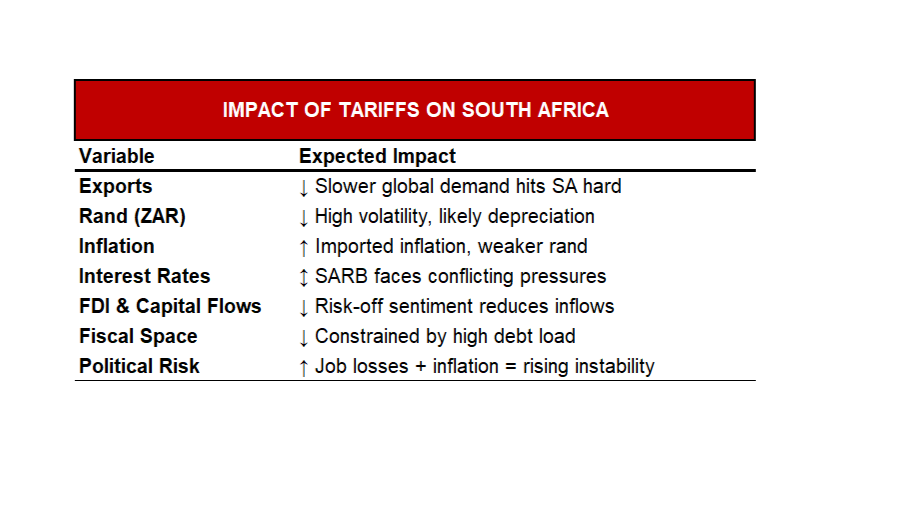
Quick Summary: Tariff Impact on South Africa

Investor Takeaway: Even without AGOA fallout, rising tariffs could create a cocktail of currency pressure, capital outflows, and inflationary shocks. Understanding this through Dalio’s lens isn’t just smart — it’s essential for navigating the risks and opportunities in South African and emerging market equities.
#EmergingMarkets #SouthAfrica #RayDalio #Tariffs #GlobalTrade #EquityInvesting #Macroeconomics #JSE #ZAR #Stagflation #BRICS #GoldStocks #FDI #MarketRisk
Source:
(1) The Effects of Tariffs: How the Machine Works | LinkedIn