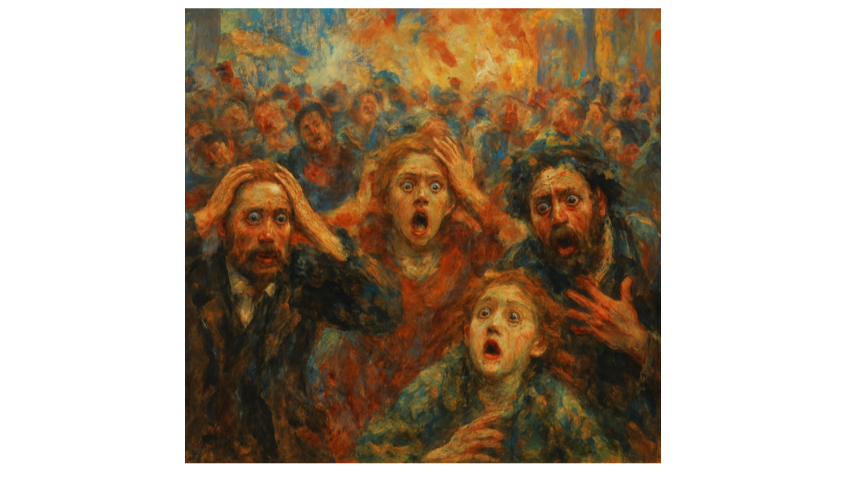
Markets don’t move on logic. They move on emotion. Understanding that is the difference between chasing returns and compounding real wealth.
Goldman Sachs’ Peter Oppenheimer doesn’t call them “recessions” or “recoveries”—he calls them Despair, Hope, Growth, and Optimism. Why? Because that’s what investors feel. And if you know how to read those emotional cues before the crowd does, you can position for alpha—not after the fact, but before it.
Here’s the emotional roadmap of every market cycle—and a sector-by-sector strategy to match.
Phase 1: Despair – When the Pain Feels Permanent
This is the market’s emotional bottom. Fear is everywhere. Portfolios bleed red. Headlines scream “Crash.” Think March 2009. Or March 2020.
But this is where legendary investors start buying. Not because the data is better—but because sentiment can’t get worse.
What outperforms here?
- Consumer staples
- Utilities
- Gold
- Deep value blue chips
Typical headlines:
- “Wall Street’s Worst Day Since 1987”
- “Recession Fears Spark Global Selloff”
- “Investors Flee to Safe Havens”
Buffett said it best in 2008: “Buy American. I Am.”
Phase 2: Hope – When It Feels Too Early to Reenter
Markets stop falling—but no one believes the bounce. Data is still bad. Fear lingers. Yet prices begin to climb.
This is the stealth rally. It’s not driven by fundamentals—it’s driven by expectations. And that’s where the edge is.
What thrives here?
- Financials
- Industrials
- Small caps
- REITs (post-rate stress)
Typical headlines:
- “Markets Shrug Off Weak Jobs Data”
- “Fed Signals Continued Support”
- “Early Signs of Stabilization Emerging”
Hope doesn’t wait for confirmation—it bets on less pain tomorrow.
Phase 3: Growth – When Fundamentals Catch Up
Now the economy is visibly recovering. Earnings beat forecasts. Job growth returns. Analysts raise targets. The crowd piles in.
But now it’s about selectivity. Everyone’s back. So you need to focus on quality.
What leads?
- Tech
- Consumer discretionary
- Healthcare
- Dividend growers
Typical headlines:
- “Earnings Crush Expectations”
- “Retail Sales Surge as Confidence Returns”
- “Market Momentum Continues Across Sectors”
This is when FOMO sets in—but smart money shifts toward sustainable growth, not hype.
Phase 4: Optimism – When Risk Feels Riskless
Euphoria. IPOs everywhere. Meme stocks mooning. AI stocks trading at 30x sales. Discipline evaporates.
This is the cycle top. But it feels like the new normal.
What works late-cycle?
- Energy
- Materials
- Infrastructure
- Capital preservation (cash, bonds, hedges)
Typical headlines:
- “Retail Traders Outperform Hedge Funds Again”
- “AI Will Mint the First $10T Company”
- “Why This Time Is Different”
Late-cycle optimism is when risk is mispriced. Don’t chase—rotate.
The Sector Playbook (Simplified):

Final Thought:
You don’t need to time the market perfectly. You need to read its mood before everyone else does.
The best investors aren’t chasing price—they’re tracking sentiment shifts. Despair into Hope. Growth into Euphoria. That’s where the real alpha lives.
The emotional map is here. Do you have the discipline to use it?
👇 Which phase are we in right now—and how are you positioning?
Harvard-Style References:
Buffett, W.E. (2009). Buy American. I Am. New York Times. [online] 17 Oct. Available at: https://www.nytimes.com/2008/10/17/opinion/17buffett.html [Accessed 9 Apr. 2025].
Oppenheimer, P. (2024). Any Happy Returns: Structural Changes and Supercycles in Markets. Goldman Sachs Research.
Oppenheimer, P. (2020). The Long Goodbye: Cycles That Link Economies and Markets. Goldman Sachs Research.
Klarman, S. (2010). Margin of Safety Revisited. Graham & Doddsville, Issue XVI.
CNBC. (2024). S&P 500 Concentration Hits New High as Big Tech Leads Again. [online] Available at: https://www.cnbc.com [Accessed 9 Apr. 2025].
Financial Times. (2024). European Banks Quietly Outperform as U.S. Tech Stalls. [online] Available at: https://www.ft.com [Accessed 9 Apr. 2025].